
Anker Power Stations
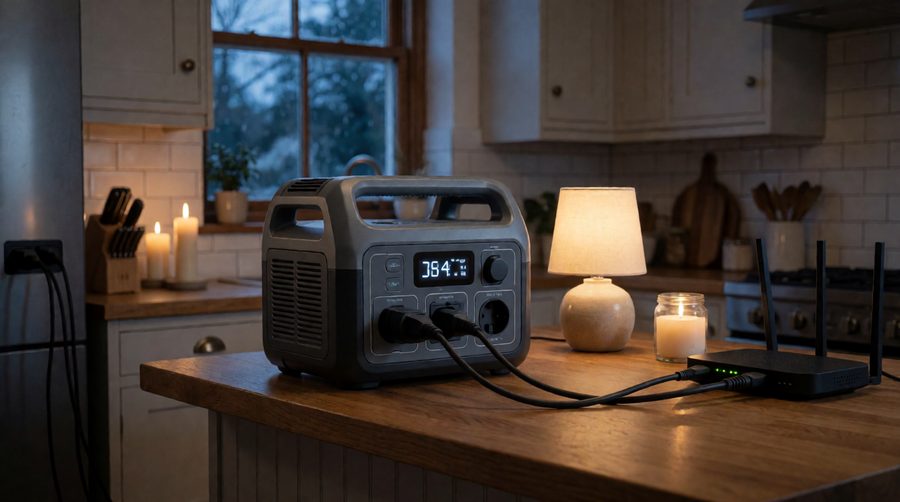
Anker power stations - sold under the Anker SOLIX name - range from the 2.8kg C300X DC power bank for phones and laptops to the 2kWh C2000 Gen 2 that keeps a fridge, router and lights going through a power cut. They suit campers, outdoor fans, vanlifers and anyone who wants quiet, fume-free backup with fast mains charging and long-life LiFePO4 batteries.
Below are the Anker SOLIX models we track, with a model-by-model comparison in the guide underneath. Comparing brands? See our EcoFlow power stations and Jackery power stations.
What is an Anker power station?
Anker is best known for phone chargers and power banks. Its bigger batteries are sold as Anker SOLIX, and an Anker SOLIX portable power station is a rechargeable lithium iron phosphate (LiFePO4) battery with a pure sine wave inverter, so you get UK three-pin sockets, USB-C, USB-A and a 12V car outlet wherever you are. You charge it from the mains, a car socket or a solar panel, then run laptops, lights, fridges and small appliances from it - silently, with no fuel and no fumes. The brand sells in the UK through Amazon, Currys, Argos and its own store at ankersolix.com/uk.
The UK line-up falls into four groups:
- C300 DC - a 288Wh power bank station with USB-C and a car socket but no mains sockets.
- C series Gen 2 - the C1000 Gen 2 and C2000 Gen 2, the main portable range, with very fast AC charging and app control.
- S series - the S2000, a compact 2kWh unit built for home backup.
- F series - bigger units on wheels: the F1500, the older F2000 (PowerHouse 767) and the 3,600W F3000.
- Solarbank - home batteries that connect to a solar array rather than travelling with you.
Anker power stations compared
Figures come from Anker's UK and EU spec sheets and UK retailers such as Currys and Argos. Where listings disagree we say so.
| Model | Capacity | AC output (peak) | Weight | Mains charge | Best for |
|---|---|---|---|---|---|
| C300 DC (C300X DC) | 288Wh | No AC sockets - 300W DC total | 2.8kg | Via 140W USB-C | Phones, laptops, cameras, festival tents |
| C1000 (Gen 1) | 1,056Wh | 1,800W (2,400W) | About 12.9kg | 58 minutes | Older model, often discounted |
| C1000 Gen 2 | 1,024Wh | 2,000W (3,000W) | 11.3kg | 49 minutes | Campervans, camping, evening power cuts |
| C2000 Gen 2 | 2,048Wh (4,096Wh with BP2000) | 2,400W (4,000W) | 18.9kg | About 45 minutes to 80% | Home backup, motorhomes, kettles |
| S2000 | About 2kWh | 1,500W | 16.2kg | 1,150W input (1,600W boost) | Compact home backup, 10,000 cycles |
| F1500 | 1,536Wh | 1,800W (2,400W) | 19.8kg | Check the listing | Older mid-size unit, 3,000 cycles |
| S2000 Gen 2 | 2,048Wh | Check the listing | Check the listing | Check the listing | Newer S2000 with more capacity |
| F2000 (PowerHouse 767) | 2,048Wh | 2,300-2,400W | Heavy - on wheels | Up to 2,200W input | Older wheeled unit, expandable |
| F3000 | 3,072Wh (expandable) | 3,600W | 41.5kg - trolley wheels | Up to 2,400W solar input | Whole-day home backup, full-size kettles |
| Solarbank 4 Pro | About 5kWh (up to 30kWh) | Up to 2,500W hardwired | Fixed install | From solar and grid | Home solar storage, not a portable unit |
The C1000 Gen 2 had a UK RRP of £999 on Anker's own store but has often sold for £500-£600 at Anker UK, Currys and Amazon. Prices move often, so check the current price on each Amazon listing before you buy.
Which Anker SOLIX portable power station suits you?
Phones and laptops outdoors: Anker SOLIX C300X DC
The Anker SOLIX C300X DC (also sold as the C300 DC) is really a big power bank for devices rather than a portable power station with sockets. Its 288Wh charges a phone around 15 times or a laptop three or four times, and its 140W two-way USB-C port also recharges it. The catch is that there's no three-pin socket, so it won't run anything with a UK plug. For a small portable power station with mains sockets, look at our small portable power stations.
Camping, campervans and caravans: C1000 Gen 2 power station
This is the Anker SOLIX portable power station most people should buy. With 1,024Wh and 2,000W of output it runs a compressor fridge for a day or more, a laptop, lights and short bursts from a kettle or hair dryer. It weighs 11.3kg - lighter than the first C1000 despite more output - and recharges from flat in 49 minutes on the mains, a speed Guinness World Records certified in 2025 as the fastest for a 1kWh power station. It takes up to 600W of solar through its XT60 port and switches to battery within 10ms if the mains fails. Compare it with other 1000W power stations and our camping power stations.
Home backup power stations: C2000 Gen 2 or S2000
For power cuts, aim for 2kWh or more. The Anker SOLIX C2000 Gen 2 holds 2,048Wh, delivers 2,400W (4,000W peak) and adds a BP2000 expansion battery to reach 4,096Wh, which Anker says runs a dual-door fridge for up to 64 hours. At 18.9kg it's still carried by its handles. The Anker SOLIX S2000 is smaller and lighter at 16.2kg, with LFP cells Anker rates for 10,000 cycles, but its 1,500W output won't run a full-size kettle. See our 2000W power stations and home battery backup picks before you decide.
Whole-house solar storage: Solarbank
The Solarbank 4 Pro is a 5kWh home battery that stores power from solar panels and can grow to about 30kWh. It's a fixed install - the full 2,500W output needs hardwiring to your consumer unit by an electrician - so it's a different product from the portable units above. For a battery you can carry, stick with the C series. If you need over 3kW from one portable power station, the Anker SOLIX F3000 is the answer: 3,072Wh, 3,600W from 230V sockets, a 20ms UPS and trolley wheels to move its 41.5kg. Compare it with our 3000W power stations.
What will a portable power station from Anker run?
| Appliance | Typical draw | Smallest model that runs it |
|---|---|---|
| Phone, tablet, camera batteries | 5-30W | C300X DC |
| Laptop (USB-C) | 45-100W | C300X DC |
| CPAP machine | 30-60W | C1000 Gen 2 - mains plug needed |
| 12V compressor cool box | 40-60W while running | C300 DC (car socket) or C1000 Gen 2 |
| TV | 60-120W | C1000 Gen 2 |
| Fridge-freezer | Averages 60-100W, start-up surge | C1000 Gen 2 |
| Travel kettle or hair dryer | 1,000-1,500W | C1000 Gen 2 |
| Microwave | 1,000-1,500W input | C1000 Gen 2 |
| 2kW kettle or fan heater | 2,000-2,200W | C2000 Gen 2 |
| Full-size 3kW kettle | 2,500-3,000W | F3000 |
On the C2000 Gen 2 a kettle must be rated at 2.4kW or less; for a standard 3kW kettle you need the F3000. The F3800 Plus power station you'll see in US reviews is built for North American 120V/240V homes and isn't sold as a UK model.
How long will it last?
A simple sum gets you close: capacity (Wh) x 0.85 / appliance watts = hours. The 0.85 allows for inverter losses. Some worked examples:
- C1000 Gen 2 with a 60W TV: 1,024 x 0.85 / 60 = about 14 hours
- C1000 Gen 2 with a 50W cool box: 1,024 x 0.85 / 50 = about 17 hours
- C2000 Gen 2 with a fridge-freezer averaging 80W: 2,048 x 0.85 / 80 = about 22 hours
- C2000 Gen 2 plus BP2000 with a 400W load: 4,096 x 0.85 / 400 = about 8.7 hours
Charge phones, laptops and other devices from the USB ports where you can - it skips the inverter, so the battery lasts longer.
Charging: mains, car and solar
Fast mains recharging is Anker's biggest selling point. The C1000 Gen 2 fills in 49 minutes and the C2000 Gen 2 reaches 80% in about 45, with just a standard kettle lead - no bulky power brick. In a van, a 12V lead tops it up slowly while you drive, and Anker sells alternator charger versions for faster charging on the move.
For solar, the Anker SOLIX C1000 Gen 2 accepts up to 600W through its XT60 port, and Anker sells folding 100W, 200W and 400W panels to match. Solar panel ratings are measured in perfect light, so in the UK expect about half to two-thirds of the rating on a bright summer day and much less in winter. A 200W panel adds roughly 600-800Wh over a sunny day - enough to refill most of a C1000 Gen 2. See our portable solar panels, or buy a station and panel together as a solar generator kit, which Anker often bundles for less than the two separately.
Cycle life, app and warranty
Every current SOLIX power station uses LiFePO4 cells. Anker rates the C1000 Gen 2 for 4,000 cycles and the S2000 for 10,000, so even daily use takes years to wear them down. The Gen 2 models connect to the Anker app over Wi-Fi or Bluetooth, so you can check charge, switch outputs and set charging limits from your phone.
The C1000 Gen 2 has a five-year warranty on its spec sheet, though some UK retailers list two or five years - check the listing before you buy. The brand has a large UK presence, which makes returns and claims simpler than with smaller brands, and UK law gives you a second route if a unit fails early: goods must be of satisfactory quality and last a reasonable time (gov.uk consumer protection rights).
Anker vs other brands
Anker's strengths are fast recharging, light weight for the power and a strong UK retail presence. EcoFlow and Bluetti offer more big expandable home systems, Jackery is the simple, rugged camping choice, and DJI matches Anker on charging speed. On a tighter budget, ALLPOWERS and VTOMAN give more watt-hours per pound with less polished support.
Safety and storage
- Use your portable power station on a hard, flat surface, indoors or outdoor, with the vents clear - not on a bed or carpet.
- Store it at about 50-60% charge somewhere cool and dry, and top it up every three months.
- Use only the supplied leads and chargers - the London Fire Brigade lithium battery advice explains why.
- In a long power cut, ring 105 for updates from your network operator.
Anker SOLIX FAQs
Is Anker a good brand for power stations?
Yes. Anker SOLIX units use LiFePO4 cells, pure sine wave inverters and some of the fastest mains recharging around, and the brand is widely sold and supported in the UK through Amazon, Currys and its own store. They cost a little more per watt-hour than budget brands.
What's the difference between the C1000 and C1000 Gen 2?
The Gen 2 has slightly less capacity (1,024Wh vs 1,056Wh) but more output (2,000W vs 1,800W), charges faster (49 vs 58 minutes) and is lighter at 11.3kg.
Can an Anker SOLIX portable power station run a kettle?
The C1000 Gen 2 runs a travel kettle up to 2,000W and the C2000 Gen 2 a kettle up to 2.4kW. For a standard 3kW kettle you need the 3,600W F3000.
Can I use one as a UPS?
Yes. The C1000 Gen 2 switches to battery within 10ms, the S2000 in under 10ms and the F3000 in 20ms, fast enough for most routers, PCs and CPAP machines. Leave it plugged in and plug your devices into it.
How long does an Anker SOLIX power station last?
Anker rates the C1000 Gen 2 for 4,000 full cycles and the S2000 for 10,000. Used once a week, that's decades; used daily, still over ten years.
Can I take one on a plane?
No. Even the C300X DC is well over the 160Wh limit for lithium batteries - see the Civil Aviation Authority rules.